

How is Emsella used?
During your Emsella treatment session, you’ll sit fully clothed on a specialized chair. The HIFEM is emitted to stimulate supramaximal contractions in the pelvic floor. By strengthening these muscles, you can regain better bladder control and see improvement in pelvic floor function almost immediately. Results do vary, so be sure to consult with one of our professionals and talk about your symptoms and expectations.
Each pain-free Emsella session is 30 minutes long, and it’s recommended you have up to two weekly sessions for three weeks for the best results.
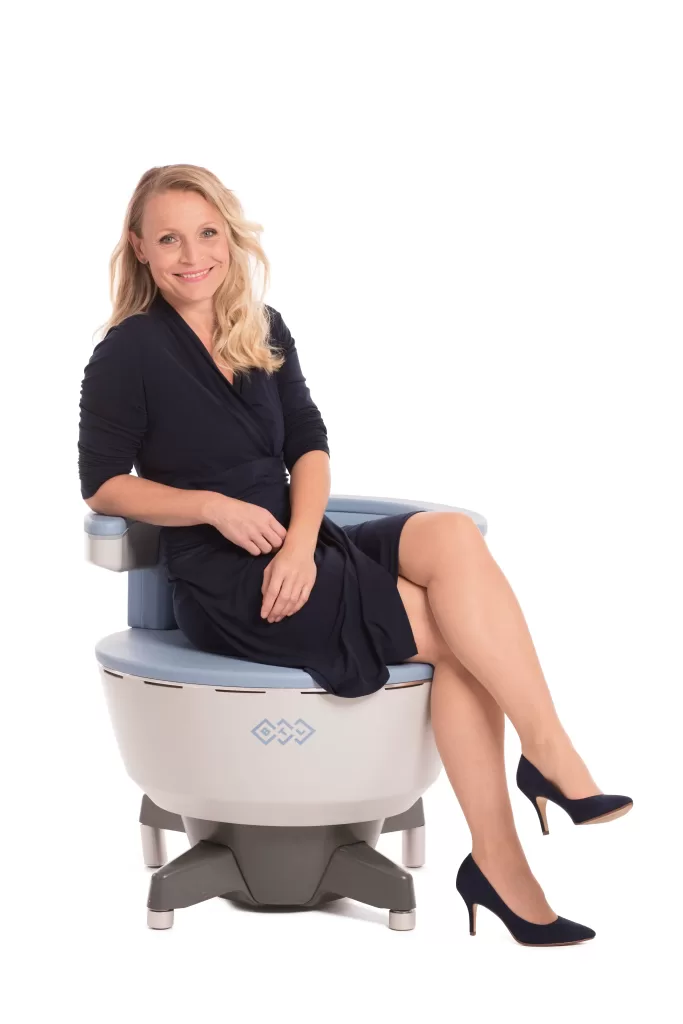
Frequently Asked Questions About Emsella
How do I know if Emsella is right for me?
If you’re experiencing any loss of bladder control, Emsella could be the right treatment for you. Whether you constantly feel the need to go, or find you need a little help holding it in when sneezing, Emsella can restore your confidence. Schedule a consultation with Barr Aesthetics today to talk about whether or not Emsella is the best fit for you.
How long do Emsella results last?
You can expect to enjoy the benefits of your Emsella treatments anywhere from four months to one year.
Are there side effects?
Since this is a non-invasive, non-surgical treatment, there is little to zero downtime after an Emsella session. You may experience some tenderness in the treatment area or temporary joint pain.
Why choose Emsella
The Emsella chair has been demonstrated to produce increased pelvic floor muscle contractility strength, resulting in significantly decreased bladder leakage and various forms of urinary incontinence. These results have been confirmed in many studies via 3D ultrasound and electromyographic measurements.
While this device is currently FDA-approved for the treatment of urinary incontinence, early evidence from studies currently underway indicates positive results for men in the treatment of erectile dysfunction (ED) as well.